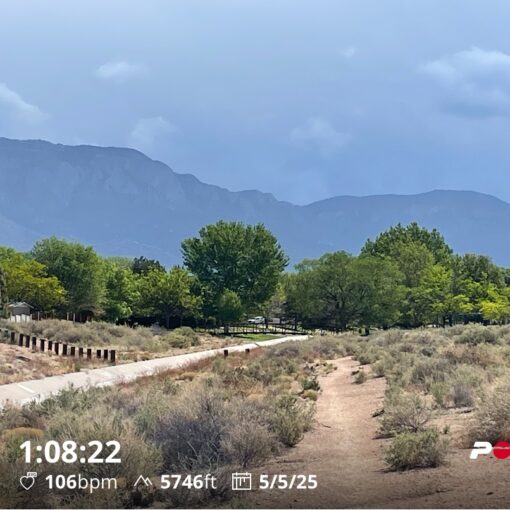
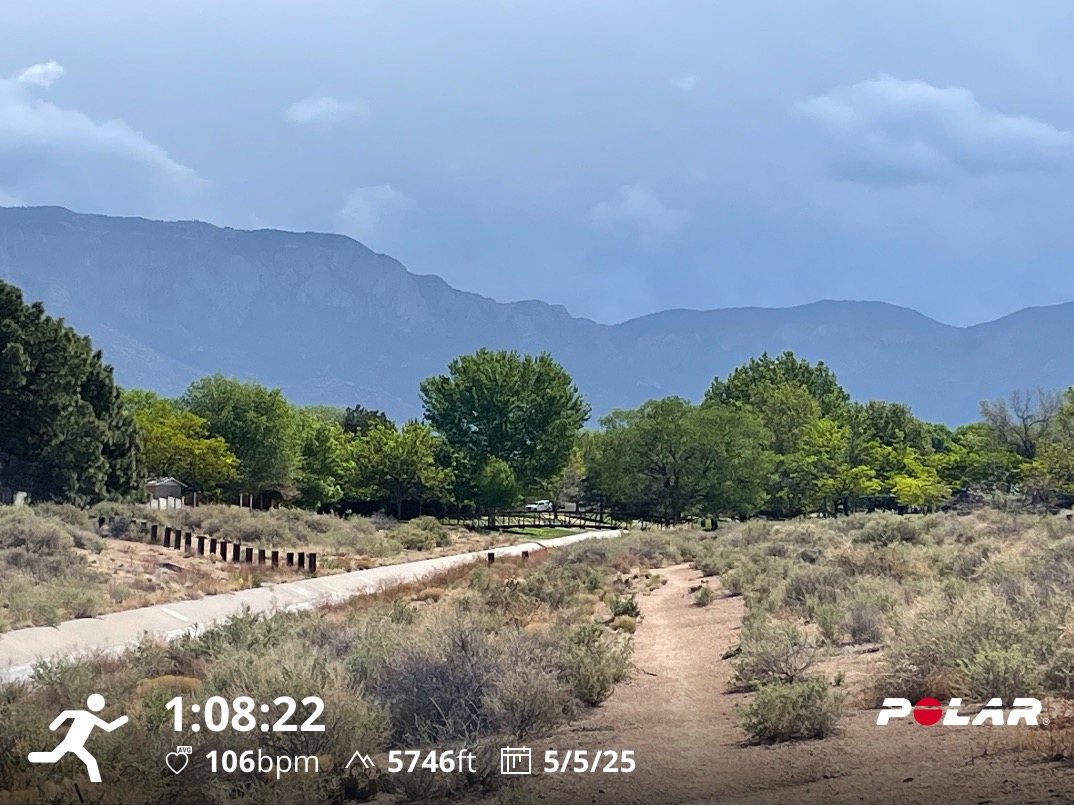
How long age-wise can a person run? At 74, I don’t think that I am even close to stopping as long as I don’t put pressure on myself. I can’t run anywhere near as fast obviously, so I run for the joy of running and because I love running in Albuquerque. Scroll down to see what ChatGPT has to say.

How Long Can You Keep Running? Age Is Just a Number—With a Few Caveats
Running is often thought of as a young person’s sport—but the road has no age limit. From seasoned marathoners in their 60s to ultrarunners in their 80s, more people are proving that running can be a lifelong pursuit. But how long can you realistically run? The answer lies in a mix of mindset, body awareness, and smart training.
The Science: Aging and Endurance
As we age, a few physiological changes are inevitable:
-
VO₂ max declines—your body’s ability to use oxygen efficiently drops, starting as early as your 30s.
-
Muscle mass and joint resilience decrease, making recovery slower.
-
Balance and flexibility become more important and more difficult to maintain.
But here’s the good news: while speed and power might decline, endurance can be maintained well into old age, especially with consistent activity.
Real-World Runners Defying Age
-
Ed Whitlock ran a marathon in under 4 hours at age 85.
-
Jeannie Rice broke age-group world records in her 70s.
-
Countless local runners are still finishing 5Ks, half marathons, and even ultramarathons in their 70s, 80s, and beyond.
So, How Long Can You Run?
There’s no hard stop. Many runners continue into their 80s and 90s, though most will adjust their goals, distance, and pace. The key is adapting your running to your body—not trying to force your body to match your running.
Keys to Lifelong Running
-
Flexibility in Training
Be willing to trade speed for sustainability. Prioritize time on your feet over distance. -
Cross-Train for Longevity
Incorporate walking, swimming, cycling, or elliptical work to reduce wear and tear. -
Strength and Balance Work
Keeping muscles and joints strong reduces the risk of falls and injuries. -
Respect Recovery
Recovery time increases with age. That’s not a flaw—it’s biology. Embrace rest days. -
Stay Mentally Engaged
Run with a group, set age-adjusted goals, or simply focus on enjoying the movement.
Bottom Line
You can keep running for as long as you’re healthy, adaptable, and motivated. Age will shape how you run—but it doesn’t have to stop you from running. Whether you’re 40 or 90, running can continue to be a joyful, life-affirming part of your routine.